Monday, October 29, 2012

High Heels and Foot Pain: What You Should Know


            It's true that nothing can lift the spirits like a sassy new pair of high heels.   But if it seems those heels were a lot more comfortable in your 20s and 30s then they are in your 40s, 50s, and beyond, you're right. Feet change with age, say experts, and some of those changes can make wearing high heels a lot less comfortable.  One of the most common: a loss of fat in the bottom of the foot. As you age, you lose some of the fatty deposits that normally protect the ball of the foot -- and some of it also slides forward towards the toes.
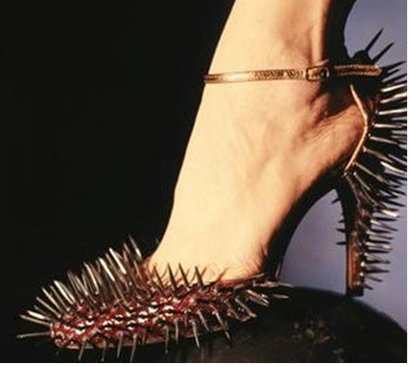
            Anytime you wear shoes that are tight or constrict the natural shape of your foot, doctors say it's bound to cause foot pain. But when you add high heels in to the equation, pain can quickly escalate to damage. In addition to restricting the foot, you are also increasing the weight on the area that is restricted, so you're not only crushing your toes, but you're crushing them and then putting weight on them, and that's a problem Among the most common problems he sees are painful, aching bunions -- those bony protrusions that usually pop up at the base of the big toe and distort the shape of the foot.
            High heels don't cause bunions, but they sure can aggravate them. Both the heel height and the point of the shoe can play a role. Some women who have bunions also have a displaced bone on the bottom of the big toe joint, which changes the way the foot "tracks" or acts during motion. If the foot is then placed in a high heel, and pitched forward, the pressure on these bones increases and bunion pain grows worse. While integrating lower heels into your wardrobe can help some, often the best solution is bunion surgery to straighten the bone.
            If you're wearing high heels on a daily basis, it's likely you've already experienced two more common problems: corns and calluses. These thickened layers of dead skin usually occur on the toes or sides of the foot and are actually the body's way of defending your feet against assault. Only in this case your shoes are the enemy. When you start developing corns and callus, or even ingrown toe nails, pressure from shoes that don't quite fit is often the problem. Other times it can be the result of a "hammertoe" -- a condition that causes the bone of the affected toe to curl under, leaving the top to rub against the shoe. When that shoe is a high heel, problems and pain are intensified. While wearing a lower heel shoe can help some, the solution may require a surgical procedure that helps straighten the hammertoe. Call your podiatrist if you have any problems or concerns.  Because when your feet hurt, you hurt all over!!


Monday, October 15, 2012

How To Quit Smoking!

The majority of cigarette smokers quit without using evidence-based cessation treatments. However, the following treatments are proven effective for smokers who want help to quit:
·                         Brief clinical interventions (i.e., when a doctor takes 10 minutes or less to deliver advice and assistance about quitting)
·                         Counseling (e.g., individual, group, or telephone counseling)
·                         Behavioral cessation therapies (e.g., training in problem solving)
·                         Treatments with more person-to-person contact and intensity (e.g., more time with counselors)
Cessation medications found to be effective for treating tobacco dependence include the following:
·                         Nicotine replacement products
o                                        Over-the-counter (e.g., nicotine patch, gum, lozenge)
o                                        Prescription (e.g., nicotine inhaler, nasal spray)
·                         Prescription non-nicotine medications, such as bupropion SR (Zyban®) and varenicline tartrate (Chantix®).
The combination of medication and counseling is more effective for smoking cessation than either medication or counseling alone.
Quitline Services
1-800-QUIT-NOW is a free telephone support service that can help individuals who want to stop smoking or using tobacco. Callers have access to several types of cessation information and services, including:
·                         Free support and advice from experienced counselors
·                         A personalized quit plan
·                         Self-help materials
·                         Social support and coping strategies
·                         The latest information about cessation medications
·                         Over-the-counter nicotine replacement medications for eligible participants (in more than half of U.S. states)


Information provided by: www.cdc.gov

Monday, October 8, 2012

Why Should You Wear Orthotics?

Almost anyone can benefit from orthotics, from children to adults but the question is whether they really need orthotics. Orthotics can alleviate many common foot problems that cause pain and discomfort in otherwise healthy people. An analogy can be made between orthotics and eyeglasses—both devices adjust problems that can impair physical function. It’s just like wearing glasses. They adjust your vision, allowing you to see, whereas orthotics will adjust your feet, allowing you to walk correctly.  In both cases, a physician performs a complete examination and then prescribes the proper amount of correction.
There are several common symptoms that may show misalignment of the feet. These signs and symptoms include the following:
·                       Abnormal shoe wear (ex: one side of the sole of the shoe wears out faster than the other)
·                       Bunions
·                       Chronic arch or heel pain
·                       Foot Pain (MetatarsalgiaHallux RigidusMorton’s Neuroma)
·                       Knee Pain
·                       Low Back Pain
·                       Flat feet
·                       Frequent ankle sprains
·                       Gait abnormalities (e.g., feet pronate [slant inward] or supanate [slant outward])
·                       Shin pain (e.g., shin splints)
·                       Foot pain, hip pain or low back pain due to pregnancy
·                       Improve sports performance
                Your feet should not hurt and pain indicates that something is wrong. If foot pain is not properly treated, the condition causing it may worsen. Relief is closer than you think.
Here are a couple of things that you can see for yourself:
                 Take your shoes and socks off and sit in a chair. Rest your bare feet on the ground in front of you and notice the contour of the arch of your foot as it rests on the ground. Now stand up and notice how the arch changes its contour. When you are weight-bearing, the arch flattens out. Some people with very flexible feet have large arches while sitting that completely collapse when they are standing. Other people have smaller arches that do not change much when they stand up because their feet are more rigid. Over the counter orthotics do not take these differences into account.
                Look at the bottom of an older pair of tennis shoes to see the wear pattern. You do not need to know what a normal wear pattern is to see that yours is abnormal. Notice where the shoe has been worn down. In some areas, the tread will have been worn away. Specifically notice the wear pattern around the heel. If you look at the shoes from the back, you can usually see the wear pattern a little better. Make sure you compare your shoes to each other. Your shoes should be mirror images of each other.
If you have any of the problems listed above and you have abnormal wear on your shoes or your arch pronates too much, custom orthotic inserts are a good treatment option for you. Call your podiatrist to see what your options are! Because When your Feet hurt, you hurt all over!!

Monday, October 1, 2012

What are the Treatments for Bunions without Surgery?


  A bunion is an abnormal and visible and visible bony growth that occurs in the joint of the big toe at the base of the toe.  This causes the area to round outwards to the side and can push the big toe up against the other toes.  Bunions can be caused by arthritic changes in the foot or structural abnormalities or may be exacerbated by wearing shoes that are too tight.  Before surgery is considered, a physician may want to try more conservative treatment for a bunion.

Change in Foot Wear
Sometimes a change in footwear is all that is needed.  The mayo clinic suggests never wearing heels that are higher than 2 ¼ inches and wearing shoes that are wide through the toes. Shoes need to provide plenty of support and space.  The goal is to prevent the bunion from rubbing against the shoe, to help reduce irritation.   While shoes my not directly cause bunions, they can make the condition worse. 

Protective Pads
Along with choosing shoes with soft insoles, and staying away from shoes with pointed toes, a physician may recommend wearing protective pad.  The American Academy of Orthopedic Surgeons claims that wearing a foot pad can help reduce friction and take pressure off of the bunion.  In addition, having favorite shoes professionally stretched may also help.

Taping and Inserts
A podiatrist can examine the feet and the way the foot lands to help detect abnormal walking patterns that may be contributing to the symptoms.  In these cases, taping the foot wearing specially made pad can help bring the foot back into better alignment.  In some cases, it may be necessary to use over the counter or customized orthotics which can correct pronation supination flat feet or high arches.  This is important as all of the above can place too much pressure on the big toe, causing a bunion. 

Medication
If a bunion is not causing serious symptoms, then no treatment is needed.  However, in some cases, pain and swelling can interfere with daily life.  In these situations, medications may be taken to help reduce inflammation.  This includes over the counter or prescription strength non steroidal anti-inflammatory drugs (NSAIDS) and/or steroid injections. This can be combined with applying ice to the area several times a day. 

Call your Podiatrist for and appointment if you are still having problems and it continues to cause you pain even after self care, such as wide toed shoes or prevents you from doing you usual activities, and if you any signs of infection like redness or swelling (especially if you are diabetic). Because remember, when your feet hurt, you hurt all over!

Friday, September 21, 2012

A CLOSER LOOK AT MINIMALIST RUNNING SHOES


Minimalist footwear is the newest and fastest growing segment of the athletic footwear industry today!  The appeal for consumers seems to be the purported benefits of decreased injury risk and/or performance enhancing effects of minimalist shoes.


            Manufacturers are marketing these shoes as more natural and more like being barefoot. Despite the fact that athletic footwear manufacturers spent the previous four decades extolling the virtues of their cushioning technologies and stability devices, some have now changed their tune and want to make sure you know that their shoes are now much more like being barefoot.  There is a whole new way of thinking about running footwear and we can sum this up as “less is more.”  The established manufacturers such as Brooks, New Balance, Asics, Adidas and others have introduced minimalist lines to compliment their established models. 
            The minimalist type of footwear has been available all along.  For some unknown reason, the tipping point came recently and piqued the interest of the media and running consumers.  Prior to the recent launch of the wave of minimalist shoes, traditional running shoes had been moving, even if slowly, toward thinner midsoles and lighter weight. 
What exactly is a Minimalist Shoe?
This really depends on who you ask.  As with any other category of footwear, there are no strict criteria that formally define a minimalist shoe.  The manufacturers seem to be setting their own criteria.  They are made to be light, flexible and minimally restrictive of foot motion within the shoe. 
            If you are going to decide to choose the Minimalist Shoe, there are a couple of things you need to consider. Only 10% of people are able to wear them because they only work for certain foot types.  You need to also consider the terrain that you are running on and if it works well for these types of shoes.   In conclusions, we will have to wait for the final verdict if the minimalist shoe can support the needs of the many.  Enjoy pain free running!


Saturday, September 15, 2012

Preventing Falls in the Elderly

PREVENTING FALLS IN THE ELDERLY

            An important public health issue that has become more prevalent in podiatry today is the issue of fall prevention in the elderly.  One in three adults over the age of 65 falls each year and a half of these people fall multiple times.  The Centers for Disease Control and Prevention report that falls are the leading cause of injury related deaths in people over the age of 65.  In 2000, the cost of treating non-fatal fall related injuries was $19 billion and is expected to double by 2020.

What are the risk factors for falling?

            With multiple levels of input and output from the central nervous system to provide us with proper muscular activation to respond to unexpected hazards, it is easy to see how numerous risk factors associated with aging can predispose people to traumatic falls.  The medical literature has identified many independent risk factors for falling. The risk factors include previous falls, balance impairment, decreased muscle strength, visual impairment,  more than four medications,  psychoactive drugs, gait impairment, and walking difficulty, depression, dizziness or orthostasis, age older than 80 years, female sex, incontinence, cognitive impairment arthritis, diabetes, and pain. 
            More than one risk factor increases the risk of falling, with no risk factors the risk of falling is 8 percent and grows to 78 percent with four.  More alarming is the finding that the risk of falling quadruples for a patient within two weeks of discharge from the hospital. 
            Medications that physicians commonly prescribe for elderly patients can negatively affect all aspects of our neuromuscular control of the body during gait.  While the use of four or more medications from any category of drugs will increase the risk of falling, identifying certain drugs that can independently increase the risk is more difficult.  In general, an increased risk of falling is associated with the following medications:  serotonin reuptake inhibitors, tricylic antidepressants, neuroleptic agents, benzodiazepines, anticonvulsants and class IA antiarrhythmic medications.  Withdrawal of these medications becomes a complicated issue when considering fall prevention.  Many times the condition patients are taking the medication for is itself a risk factor for falling.
            Most of our elderly patients experience a decline in balance and muscle strength.  The combination of this decline with visual and vestibular compromise increases the risk of falling. What can be done? One way that podiatrists offer relief from imbalance issues is the MBB or Moore Balance Brace. It is all about making it easy for the elderly. The MBB has been designed to easily fit into a variety of different shoes. Because the MBB is so light weight and has a sleek design, the MBB is easy to wear.
            The type of shoe used with MBB is important and should not be left to the patient alone to figure out. There are many light weight stable shoes that are options for seniors, but care needs to be taken to make sure that the MBB is not being used in a house shoe or slipper or without shoes. You should see your Podiatrist to evaluate your needs because your quality of life is the most important to us. 
  

Saturday, September 8, 2012

Recognizing and Treating Lower Extremity Gout

Recognizing and Treating Lower Extremity Gout

Gout is an inflammatory arthritis that results from high uric acid in the blood, from either the body’s overproduction or under excretion of uric acid.  It typically presents with acute onset and can be recurrent.  The first metatarsophalangeal joint (MPJ) is involved in 90% of individuals with gout. Gout can result in joint deterioration and destruction. 
            For the last two years, gout has been much more recognizable to the public in print, TV, and other forms of media.  The painful condition of gout is now more appreciated as the number of gout medications, formulations and reformulations has changed the landscape for the public and patient base, and thus changed the management by physicians. 
The actual number of true gout cases is likely underestimated.  Many times patients and physicians treat this with OTC analgesics or anti-inflammatories without the proper diagnosis and workup for gout.  High uric acid in the blood is the cause of gout.  There is an increasing prevalence with significant presence of one or more disorders (or diseases) including cardiovascular disease, hypertension, renal insufficiency and metabolic syndrome. 
Researchers have stated that gout affects approximately 5 to 6 million people in the United States with prevalence on the rise. Gout reportedly occurs more in men that in women, affecting 2 percent of men older than 30 years of age.  Risk factors include being male, postmenopausal, a strong family history, kidney disease, organ transplants, excessive alcohol use, a diet high in purines, (red meat and seafood) metabolic syndrome, obesity, dehydration, and exercise.   Studies have shown that heavy alcohol use in general, particularly beer, increase the incidence of gout whereas moderate use of red wine, did not.
            It is well known that the incidence of gout is higher in people with increased dietary intake of purines, particularly meat and seafood, as well as ingestion of beer and spirits, soft drinks and fructose.  It is lower in those with increased intake of coffee, dairy products and vitamin C (all lower uric acid levels).  It must be clarified that coffee and tea can also increase uric acid levels and the presentation of gout.  Purine-rich foods such as fruits, vegetables and foods that include a high citrus content can affect the balance between urate reabsorption and secretion which is critically linked to the uric acid elimination in urine. 
            In conclusion, gout is relatively common inflammatory arthritis that occurs in all age groups.  It can be particularly debilitating disease, causing limitation of activity and lowering the quality of life.  It is now associated with the comorbidity of other systemic diseases. If you feel you may have gout or any symptoms of gout, see your doctor to help diagnose and treat this disease.